Advanced Footwear Technology (Super Shoes) and Injury Risk
Are super shoes hero worthy performance enhancers or villainous antagonists?
Each week brings a new record in athletics: Sebastian Sawe smashing the marathon record in a time of 1:59:30 and even the second athlete broke Kipchoge’s record of 2:01:09 from the Berlin Marathon in 2022. Also, on the track this year, Emmaunel Wanyoni set a new 1000m world record of 2:11.83. And who can forget Josh Kerr and his impressive victory in the mile world record, in a time of 3:42.66. And other world records seem on the precipice of being broken.
So, what is the common denominator? What do all these amazing athletes have in common?
The shoes. The infamous super shoe, otherwise known as AFT (advanced footwear technology).
What is so super about these shoes?
Let’s look at the science. The advanced footwear technology (AFT) of the new racing shoes is reported to improve running economy by around 2-4%. The design can be divided into four distinct constructs. The longitudinal bending stiffness provides a rigid plate (usually constructed in carbon fibre) that stiffens the shoe against forefoot bending. This reduces the energy that is lost at the metatarsophalangeal joint. Furthermore, the midsole, constructed of a low-density foam, provides high energy return. In layman terms, this means the energy that an athlete puts into their stride is recycled and, subsequently, the athlete becomes less fatigued. Nike themselves suggest that the Pebax foam and curved carbon-fibre plate, situated in the midsole, is a game changer (Alger, 2019). The curvature of the plate, according to Nigg et al., may create a ‘teeter-totter moment’ by propelling the runner’s heel upwards and forward during take-off. If this is the case, the work required by the runner decreases, which means the runner can sustain a greater effort for longer. Finally, stack height is a key feature of the super shoe that changes an athlete’s running style. Kettner et al. discovered that runners in a 50mm stacked shoe showed longer ground contact times and a lower frequency of steps. They also noted that runners bounced more, with a greater vertical movement, which is normally associated with a less efficient running style.
Therefore, it seems conclusive that the super shoe has the ability to elevate running to new levels and many PBs can be attributed to the emergence of this type of shoe, but are these shoes for everyone?
And could super shoes become the villainous anti-hero, bringing about debilitating injuries?
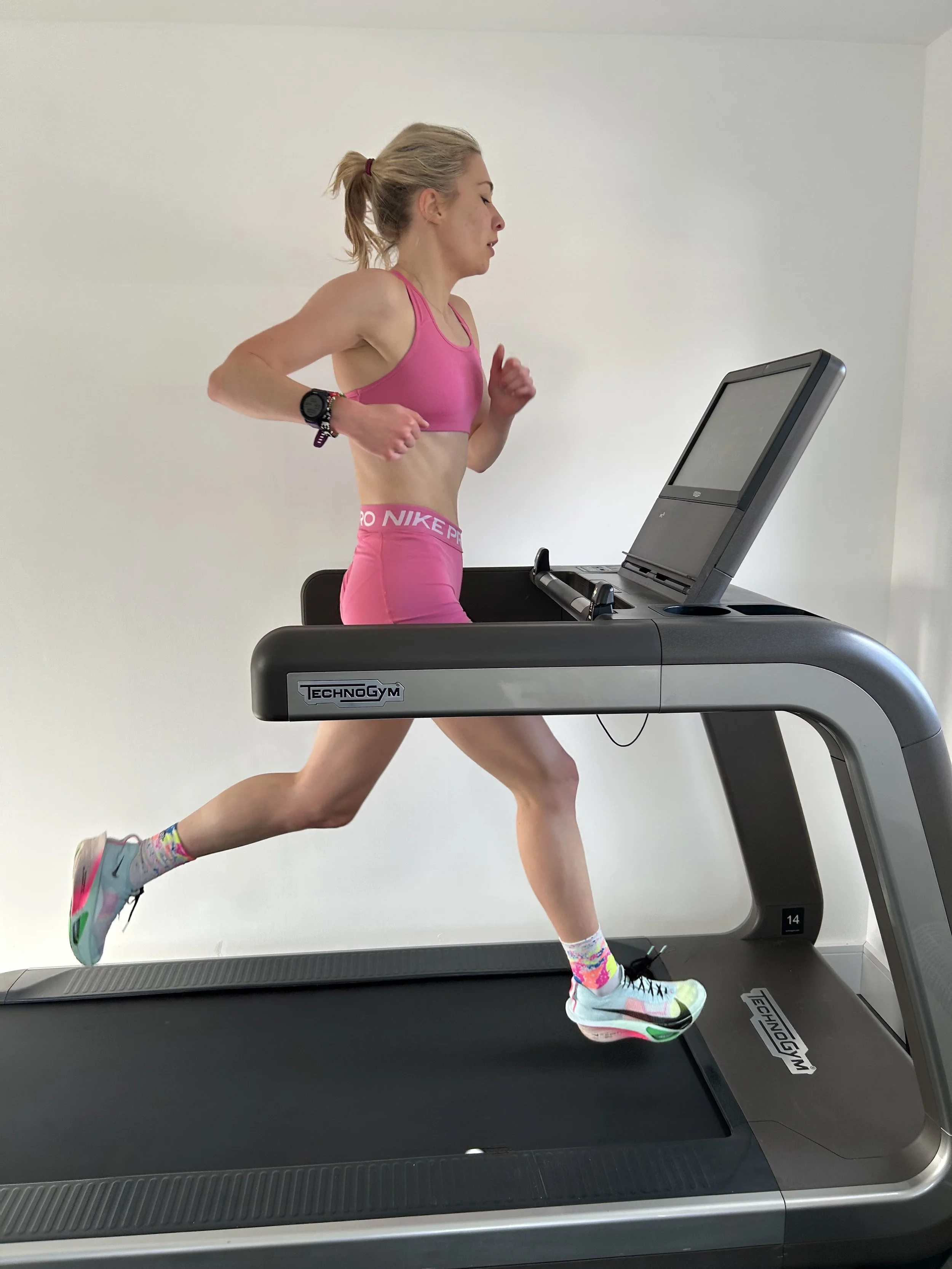
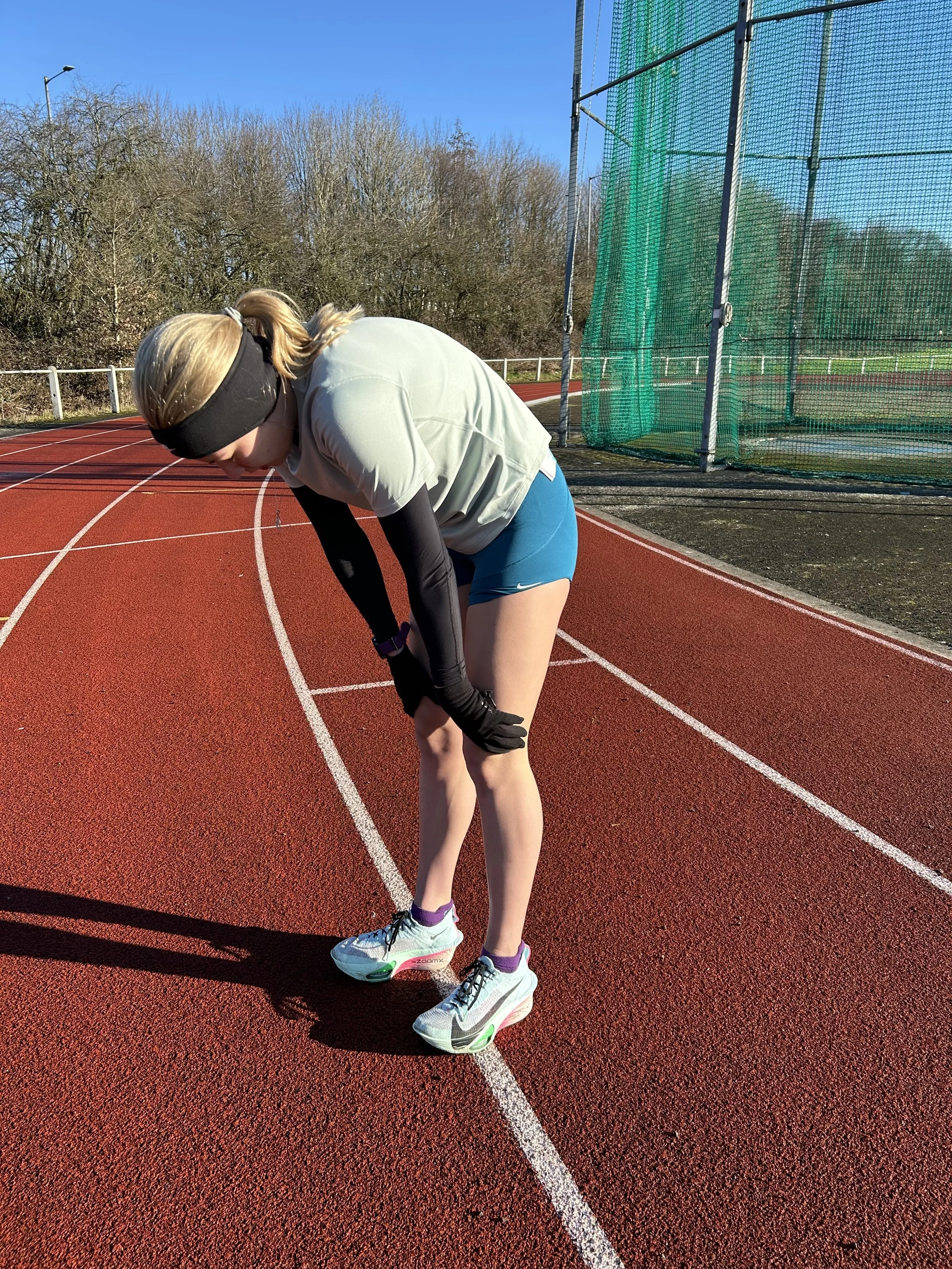
So, do these shoes increase the risk of injury in runners? Currently, no study has measured injury incidence. But a same-group case series (Tenforde et al., 2023) explored the stress placed on an athlete’s feet by wearing these shoes. The researchers investigated five competitive runners who all developed navicular bone injuries after using carbon fibre plate super shoes. However, when we look at the details of the study, it is difficult to draw definite conclusions. Rather than comparing the athletes with a separate control group, the study examined the shared experiences to identify patterns. The study concluded that super shoes definitely improve running economy and boost performance, but they alter the foot and ankle biomechanics, which could in turn shift forces onto vulnerable areas of the foot, such as the navicular bone. However, these findings must be taken with caution, as there were only five cases and no control group. Perhaps, this may provide an important warning but not offer a conclusive result.
Furthermore, a mechanistic study (Bruneau et al. 2026) suggested midfoot bone-stress concerns as a result of impact loading when fatigued (Luo et al. 2026). The picture becomes more complex when results from controlled studies are considered. Research seems to suggest that advanced footwear technology (AFT) may alter where forces are distributed throughout the body. Therefore, if some athletes have weaker feet or other areas of weakness that become exposed to greater forces, they may sustain injuries through wearing this type of shoe. For example, Wang et al. (2026) concluded that lower loading rates were found in super shoes compared with conventional running shoes. Moreover, Guan et al. (2025) discovered that there were lower levels of stress placed on the metatarsal bones. Similarly, Giachetti Martin et al. (2026), using a pooled analysis, discovered no consistent changes in joint power, leg stiffness or running cadence. Together, these findings reveal that super shoes can redistribute mechanical load rather than increasing or decreasing injury risk.
On reflection, evidence doesn’t seem to suggest that you’re paying a load of money to sustain an injury. But as with everything, it’s about moderation and good habits. Shoe rotation is always key to avoiding injuries. Don’t wear the same shoes all the time.And manage your expectations: the super shoe was designed for flat courses. I once did a boggy, hilly Parkrun with a guy who wore a pair of Alphaflys. He was slipping and sliding all over the mud, resembling Bambi on ice. Perhaps an injury waiting to happen? And you need to careful about your cadence and how your gait is altered. If you’re high risk and you know you over-pronate, you need to manage how you feel and just be wise to soreness and pain. Some people just use super shoes for racing to eliminate the risk of placing undue stress on weak areas.
The super shoes: a whole lot of science in a single pair of shoes. Are they the magic bullet? Well, research seems to suggest they’re certainty contributing to a whole lot of broken records. Are they for us mere mortals? If you’re prepared to splash the cash and know your own body, limitations and weaknesses, perhaps you deserve a new pair of shoes to add to your burgeoning collection.
Bibliography:
Tenforde, A., Hoenig, T., Saxena, A., & Hollander, K. (2023). Bone stress injuries in runners using carbon fiber plate footwear. Sports Medicine, 53(8), 1499–1505. https://doi.org/10.1007/s40279-023-01818-z
Bruneau, M., Gaudette, L., Sirls, E., Hollander, K., Saxena, A., Hoenig, T., De Carlo, F., Fodera, A., et al. (2026). Biomechanics associated with bone stress injuries while using advanced footwear technology in elite distance runners. PM&R, 18(S2), S143–S150. https://doi.org/10.1002/pmrj.70153 — Source: raw/PM R - 2026 - Bruneau - Biomechanics associated with bone stress injuries while using advanced footwear technology in elite.pdf
Alger, K. (2019). Sole sensations: The bottom bits of the latest running shoes, explained. Runner's World. https://www.runnersworld.com/uk/gear/shoes/a27476498/running-shoes-sole-explained/
Bruneau, M., Hollander, K., Kipp, S., Lieberman, D.E., Soo Hoo, J., Saxena, A., Zech, A., & Tenforde, A.S. (2026). Advanced footwear technology versus minimalist footwear for injury prevention and performance in runners (Point-Counterpoint). PM&R, 18(S2), S151–S159. https://doi.org/10.1002/pmrj.70149 — Source: raw/PM R - 2026 - Bruneau - Advanced footwear technology versus minimalist footwear for injury prevention and performance in.pdf
Wang, W., Potthast, W., Torniainen, K., Xu, S., Ammann, K., Jing, Y., Wang, S., Fu, W., Liu, J., & Arndt, A. (2026). Performance benefits without added injury risk? Effects of advanced footwear technology on running economy and biomechanical risk in recreational runners. Scandinavian Journal of Medicine & Science in Sports, 36(4), e70275. https://doi.org/10.1111/sms.70275 — Source: raw/Scandinavian Med Sci Sports - 2026 - Wang - Performance Benefits Without Added Injury Risk Effects of Advanced Footwear.pdf
Kobayashi, E., de Toledo, R., de Almeida, M., Sprey, J., & Jorge, P. (2026). Metabolic effects of carbon-plated running shoes: a systematic review and meta-analysis. Frontiers in Sports and Active Living, 7, 1710224. https://doi.org/10.3389/fspor.2025.1710224 — Source: raw/fspor-7-1710224.pdf
Giachetti Martin, S., Kobayashi, E.N., Amaral Coelho de Azevedo, L., Bonini Vieira Campanhã, D., Escudeiro de Oliveira, D., & Baches Jorge, P. (2026). Carbon plates in running shoes biomechanics: a systematic review and meta-analysis. Frontiers in Sports and Active Living, 8, 1764338. https://doi.org/10.3389/fspor.2026.1764338 — Source: raw/fspor-8-1764338.pdf
Luo, X., Liu, R., & Li, B. (2026). Influence of carbon-plated running shoes and fatigue on lower limb biomechanics. Journal of Biomechanics, 195, 113102. https://doi.org/10.1016/j.jbiomech.2025.113102 — Source: raw/1-s2.0-S0021929025006141-main.pdf
Kettner, C., Stetter, B.J., & Stein, T. (2026). The effects of shoe sole thickness on running style and stability during downhill running at different speeds. European Journal of Sport Science, 26(1), e70116. https://doi.org/10.1002/ejsc.70116 — Source: raw/European Journal of Sport Science - 2025 - Kettner - The Effects of Shoe Sole Thickness on Running Style and Stability.pdf
Nigg, B. M., Subramanium, A., & Matijevich, E. S. (2022). Towards a biomechanical understanding of performance improvement with advanced running shoes. Footwear Science, 14(3), 133–137. https://doi.org/10.1080/19424280.2022.2127543
Kettner, C., Stetter, B.J., & Stein, T. (2026). Running style and stability during uphill running are largely preserved with increasing shoe sole thickness. https://doi.org/10.64898/2026.04.16.719110 — Source: raw/2026.04.16.719110v1.full.pdf
Guan, L., Guo, Y., Wang, H., Wu, Y., Jia, Y., & Zhu, X. (2025). Effects of carbon-fiber plate design on foot stress injury risk: a finite element analysis. Frontiers in Bioengineering and Biotechnology, 13, 1723984. https://doi.org/10.3389/fbioe.2025.1723984 — Source: raw/fbioe-13-1723984.pdf