This week marks the opening of a massive box office hit: The Odyssey. Christopher Nolan has surely struck gold turning this epic poem into a film. The action film, written and directed by Nolan, charts a classic hero’s journey, or quest narrative, revolving around themes of perseverance, temptation, resilience and all those qualities we need to exhibit to thrive in life.
Having enjoyed a private school education (not a statement that makes me very popular these days), Classics was undoubtedly a highlight of my education. And Mr Oracz, who basically cultivated a theatre of learning, really brought this epic poem to life, showcasing the importance of studying Classics: a subject steeped in the past that can tell us so much about the human condition. The whole experience of studying Classics was hugely immersive and this particular exalted story of a warrior-like hero taught me so much about life.
Let’s take the central character: Odysseus. He has a goal: to return home. And many of us have goals. In athletics, you might want to hit a new PB or win a particular race; in cycling, you may want to move up to the next category or even beat your cycling nemesis. For some, the goal could be paying off a mortgage, or even just saving up for a new car, an amazing holiday or even just switching jobs or career paths. But, as with many things in life, there is often a goal conflict. In the case of Odysseus, he encounters countless distractions that threaten to thwart and derail his quest.
Whilst Odysseus is depicted as intellectual, tactical, pragmatic and resourceful, he still has to battle with the unknown. Often, he doesn’t know his location, or know if his family is even alive, or why the gods are angry with him. The uncertainty that he experiences could render him hopeless. However, that sense of hopelessness is the enemy that threatens our ability to achieve our goal or quest. If our brains default to that pessimistic mood of hopelessness, we suddenly lose control. Then, when we fail to take control of our lives and our futures, our hopes and dreams become impossible. Even a slither of hope can give us the optimism to drive forward in the face of adversity.
Then, there is temptation. And this is another enemy ready to thwart our quest. In The Odyssey, Odysseus’ men eat the lotus: a mythical, addictive plant that cultivates blissful apathy and memory loss. When Odysseus’ men consume the plants, they forget their homeland and forget about their quest. And how can we not draw parallels with modern life? Our lotus could be alcohol, drugs, social media, junk food. Living for the weekend to consume vast amounts of alcohol can have a harmful effect and impede our performance in so many areas of life. And endless scrolling through TikTok or Instagram is another potential lotus that has a significant and damaging effect on us. So many of us get sucked into a vortex of social media that distracts us from the real world and, ultimately, hampers our quests. Too often the easiest path is the path we choose. We choose comfort over adversity. We choose ease over difficulty. We choose the lift over the stairs. But as Odysseus would attest, the growth comes through the difficulty and this is what enabled him to survive.
And what about those sexy Sirens? As Odysseus’ crew navigated the oceans, they encountered terrifying hybrid creatures. Contrary to popular beliefs, they were not the alluring mermaids associated with temptation, they were in fact half bird, half woman. Their songs were so alluring, and impossible to resist, that Odysseus ordered his men to plug their ears with beeswax and he was tied to ship’s mast so he could avoid steering the ship to their doom. So, what’s our lesson here? Sometimes, we all need a little intervention and a push in the right direction. Whilst many of us are pretty driven and self-disciplined, every now and again, someone needs to push us towards the right path so we know which course of action to take. This could be from our coaches, parents, bosses, friends. Everyone needs a sidekick on a quest or mission. Sticking with literature, even Frodo needed Samwise Gamgee.
Hubris can bring about the destruction of a hero and even a slither of excessive pride threatens to destroy Odysseus. The defeat of Polyphemus (the Cyclops) is not enough for Odysseus; it’s that male bravado that demands that Polyphemus needed to know who had defeated him. If Odysseus had just let it go, he wouldn’t have encountered the wrath of Polyphemus’ father, Poseidon, who almost destroyed his ship in a storm. And once again, Homer gives us a life-lesson here. Sometimes, we have to take the victory in a humble way, riling up your competitors can sometimes give them the extra fuel they need to beat you. On the track, for instance, even professional athletes have their nemesis who they would just love to beat. Whilst this can be a motivating factor, it can sometimes be a downfall. Too much ego can derail a quest. In the men’s 1500m final at the 2024 Paris Olympics, Josh Kerr and Jakob Ingebrigtsen’s fierce rivalry possibly cost them both the gold medal. Arguably, their fixation on beating each other caused them to lose sight of the other competitors within the race, contributing to Cole Hocker stealing the win.
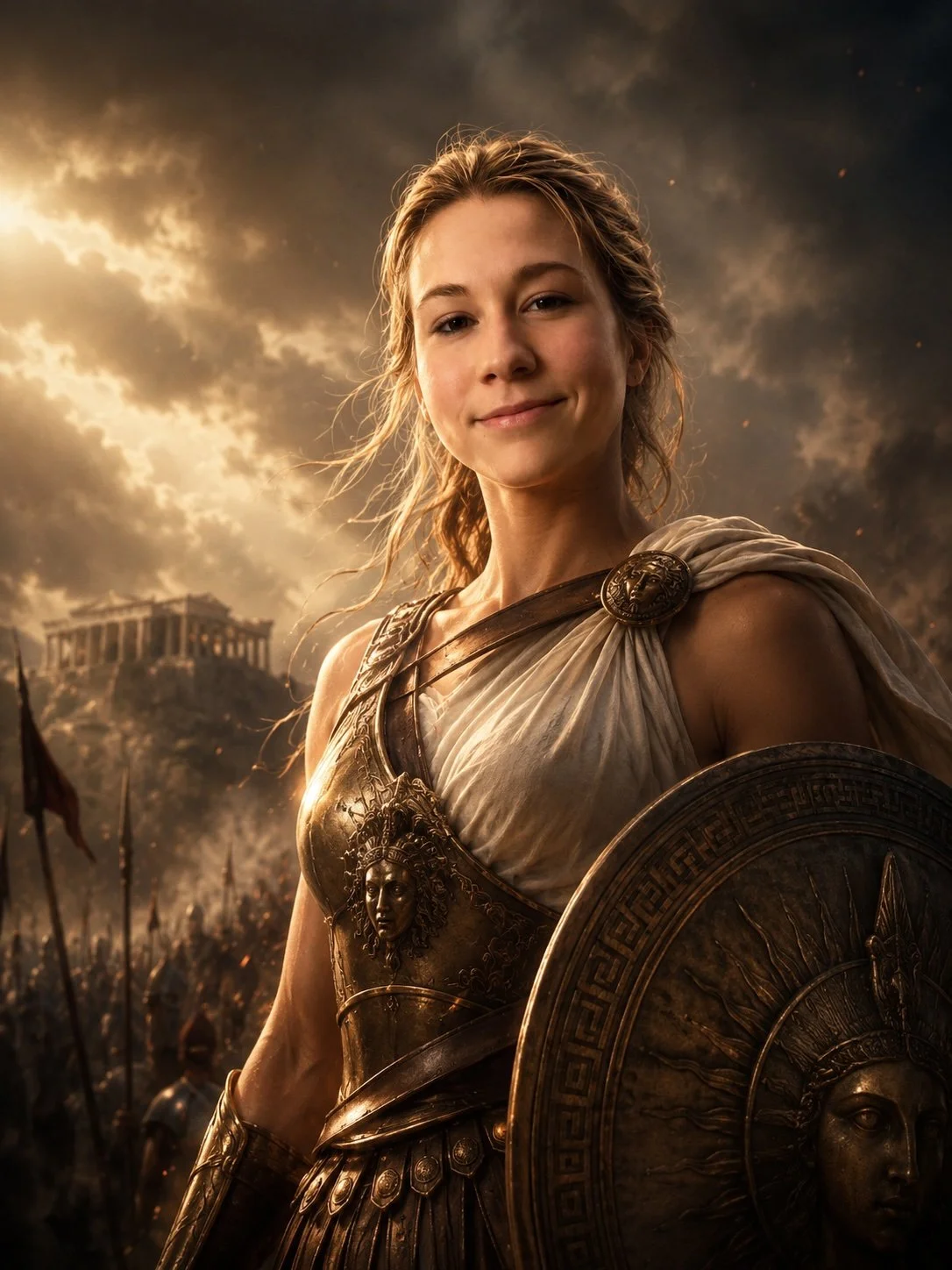
Few people realise that the noun ‘mentor’ takes its origins from The Odyssey and if we look to the world of popular fiction, we see Luke and Yoda, Bilbo and Gandalf, Daniel and Mr Myagi. Mentor simply means ‘old friend’, and whilst we may have thousands of followers on Instagram and our mobile phone contact list may be brimming, who can you really call at 2am in the morning? Our 2am friends are the ones we need to value and hold close. Too many relationships today seem transactional, when what we really need is someone we can wholly trust. Odysseus left Mentor in charge of his household as his old and trusted friend, relying on him to look after his son and raise him. And alongside Mentor, Athena (Goddess of War and Wisdom) is another 2am friend who provides Odysseus with support, advice and wisdom, protecting him from dangerous situations and encounters.
Homer’s The Odyssey may have been written over 2700 years ago but the lessons still hold true for today. Life is challenging and difficult. We’re a flawed species. But that’s what brings about the complexity of the human condition. Every single day, we face challenges and very often there isn’t one single solution. We have to navigate life with flexibility, strategies and our own judgement. And sometimes we err, we make mistakes and, if you’re anything like me, you will have so many regrets. But even classical heroes made mistakes and just because you’re a mere mortal, it doesn’t mean you can’t succeed on your quest. You may get distracted, you may suffer the perils of temptation, you may even suffer a few injuries along the way. But just as long as you hold on to that slither of hope, you may just reach your own destination – even if, like Odyesseus, it takes 20 years.