Competition: The Driving Force Behind Every Achievement
One of the many reasons behind my boyfriend’s decision to unceremoniously dump me via text was that I viewed life as a competition and whilst I am willing to concede (oh, the irony) that I enjoy a little rivalry, I am unwilling to accept it’s a character flaw. Is a competitive instinct really a curse, or a blessing?
Adidas versus Puma. Pepsi and Coca-Cola. Burger King and McDonalds. Ronaldo and Messi. Nadal and Federer. The world is full of antagonists, spurring each other on. Life is about rivalry based on competition; you just can’t escape it. Competition surrounds us on a daily basis, fuelling innovation and pushing boundaries. Scientists, Christiansen and Loeschcke, concluded in their research that competitiveness is a biological feature has been honed with our instinct to survive. Even trees produce higher branches to divert light from their perennial neighbours. Competition is innate; it catalyses growth, progression and transformations. Competition can convert us from fun runners to triathletes, from musicians to leading acts and from a failing figure skater to a fashionista (Vera Wang).
So, let’s take Adidas and Puma for example. These two brands began life as two brothers with a shared vision: to make sports shoes. Yet their rivalry, after a disagreement, fuelled their competitive instincts to propel them to become two of the biggest sporting names in history. Each brother wanted to make better shoes and be more successful than the other, promoting innovation and scientific advancements in the sports shoe industry. They may never have spoken again, but they galvanised their status as sporting legends. Their cutthroat, win-at-any-cost mentality turned their humble sports shoes into a multi-billion pound industry. In the absence of their competitive rivalry, they may have never left the starting blocks and reached the top of the sports shoe podium.
Now, I’m not suggesting competition should evolve into a cut-throat battle that causes family members to stop talking to each other. I acknowledge that unhealthy competition breeds toxicity and a learning environment that stifles motivation, but healthy competition can make us better human beings.
Competitive instincts are cultivated through the desire to win or to become the best in whatever activity you do. An individual feels a sense of accomplishment when they perform well at something. The human brain is wired to respond to the possibility of success. When an individual encounters a challenging situation, their brain releases dopamine, a neurotransmitter. This hormone makes an individual feel good and they want to replicate that rush and get another hit. Dopamine gives people a natural high that keeps them engaged and motivated to keep achieving. In 2013, a study using functional magnetic resonance imaging, was conducted, where scientists at Stanford University scanned participants when they engaged in competition. They concluded that beating an opponent triggered a reward system in the brain. Competition fuelled motivation, achievement and adaptation. It increased performance and boosted self-esteem.
As social creatures, we like to compare ourselves to our human counterparts. And rivalry can be a force for good. A study in 2017 saw scientists discovering that rivals offer external motivation, leading to an increase in effort levels. Better competitors lead to a better performance and increased progression, offering individuals a benchmark and a standard to work towards. A personal best, a medal, a winning bid. The results of competition can be wide ranging and varied, but it gives us recognition that we can do something well.
However, competition could be seen as a double-edged sword. Take Tonya Harding, for example, whilst not explicitly implicated in the injury of her rival, Nancy Kerrigan, before the 1994 Winter Olympics, clearly the competitive instincts were so destructive that she was suspected of foul play. Going further back in history, George Best famously refused to play in the same match as Bobby Charlton because the competition had become so intense. Like with every force, competition can be applied to push people via motivation, or, conversely, to crush people because they become an unwieldy force. It's about moderation. Isn’t everything?
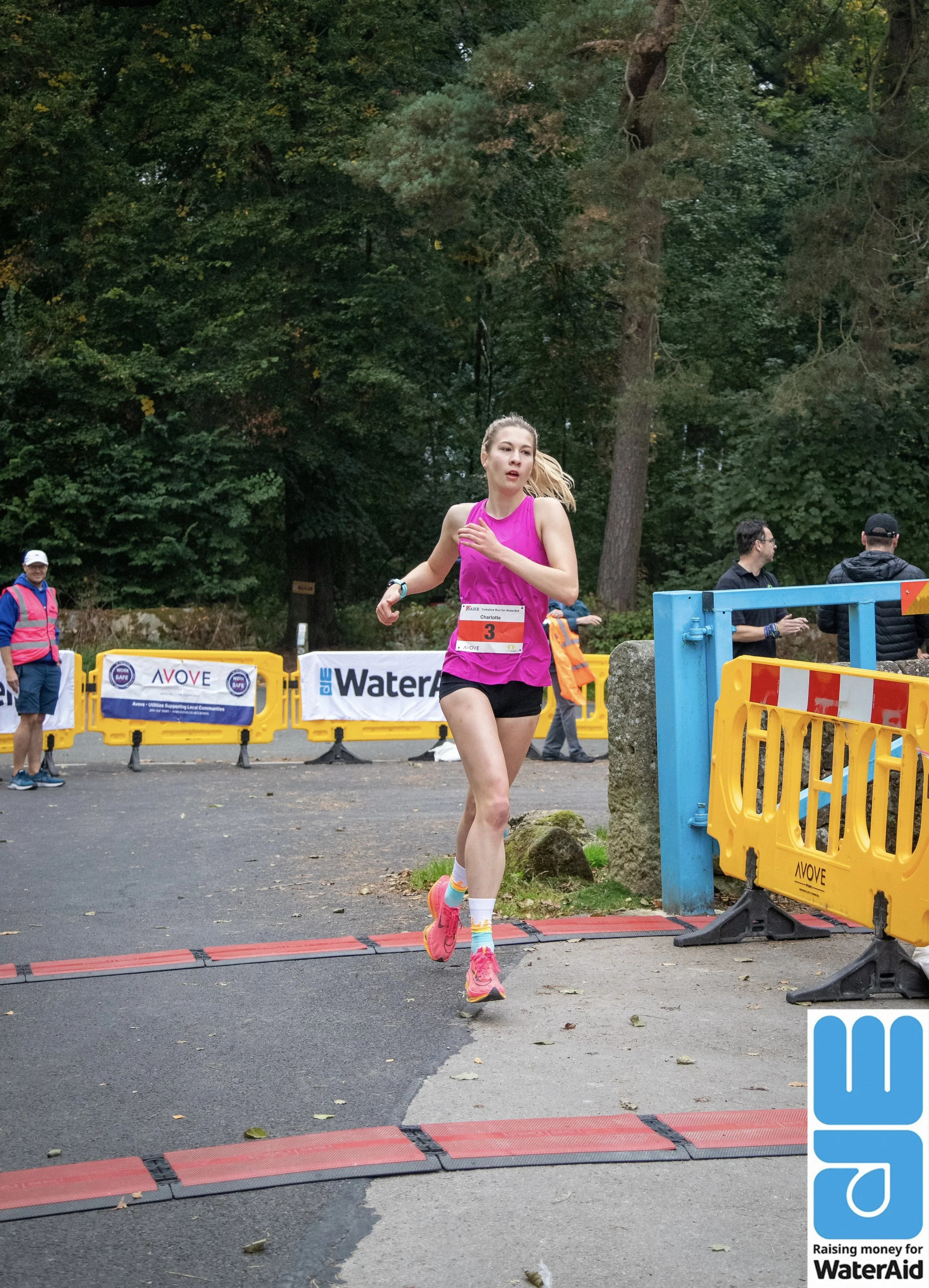
On a more personal note of self-reflection, I have to ask myself: how has my competitive instinct helped or hindered me? In terms of sport, I’ve always chased a time in running. Each race, I want to be faster. I search for the margins. Should I hit the gym to gain more power? Should I adapt my diet? Should I buy the next evolution of speed shoes? And whilst I become obsessive at times, it drives me. I’m tightly wired; it’s who I am. But then in my academic pursuits, I want to be better. When I was underachieving in my GCSE Chemistry, I hated being the worst in my class; I wanted to get better and become the best. I identified my weaknesses and worked on them. I eventually got a grade 9. Yet there’s the duality in my persona, the other side to the coin and there lies the problem. Yes, I look at someone and automatically want to compete. I want to be faster than them, stronger than them, achieve higher than them. Random individuals can become my foe in a matter of seconds. Is it a sickness? Maybe. But one I’m learning to live with. NBA superstar, Kobe Bryant once said, he was ‘Always chasing the win. Never done.’ Winning can haunt even the most iconic athletes at the top of their game.
Therefore, as I nurse my wounds and accept my rejection, I’ll take the criticism levelled at me: I am reactive, stubborn and too outspoken at times. But I refuse to kowtow to the idea that my competitive instinct is a negative trait. I like to win; I like to celebrate victory from the top of a podium. Whilst it may be the social norm to be humble and celebrate participation, no one remembers who came second to Usain Bolt. Everyone needs a rival and competition is the hallmark of a life well lived.
‘Not everything in life is a competition!’ That’s what losers say!