Roosevelt was right: ‘You can’t improve on it.’
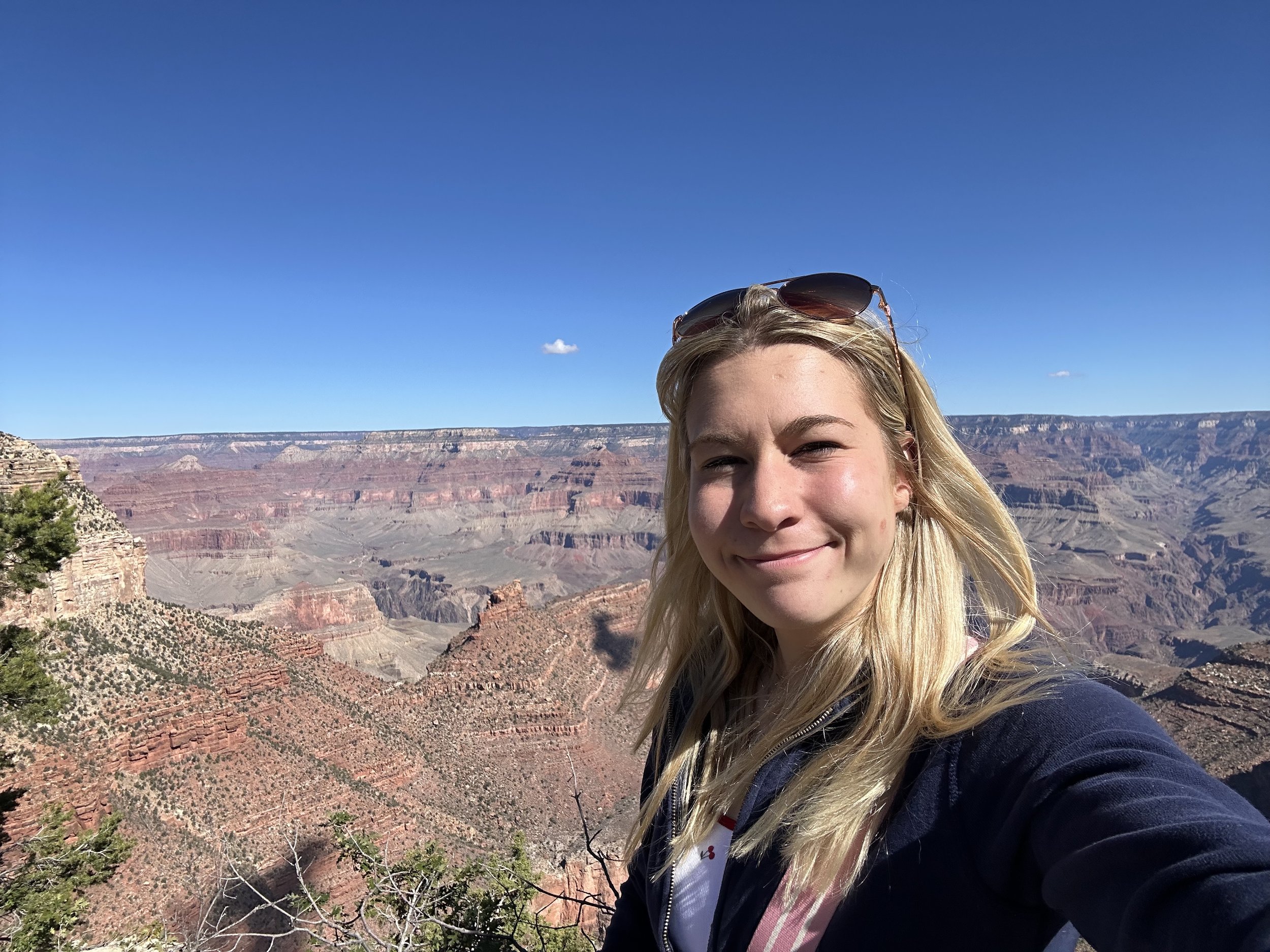
The Grand Canyon deserves its status as one of the natural wonders of the world, consistently recognised alongside Mount Everest and the Great Barrier Reef. It had been on my list of places to go since I learned in History that President Roosevelt, in 1908, designated it as a national monument, describing it as ‘beautiful and terrible and unearthly.’
At 6000 feet deep, you could stack 5 Empire State Buildings inside it, and to hike it, going up and down all the tributaries, would amount to 750 miles, just under the length of the UK. Needless to say, the canyon indeed deserves its premodifier ‘Grand’.
So, as summer merged into autumn, my feet started to itch and my pockets started to burn. Spontaneously, I decided to go and see what Arizona had to offer in the way of running. Post-summer blues persuaded me to part with a big chunk of the contents of my bank account and I found a flight to Phoenix, Arizona. After ten days of nose bleeds, a side effect of altitude training in the San Francisco Peaks, I’d earned a day off. Booking a tour of Grand Canyon (the Americans don’t like to use the definite article), I was excited to be collected by Arizona Tour and Travel and discover what all the hype was about. Was it more than just a ‘big ‘ole’ (a review from one Yelp visitor)?
I’d heard, after reading an article by journalist Kevin Fedarko, that it’s a ‘roofless cathedral’ and a place that enables you to truly worship God and reminds you of your insignificance. I was ready to be inspired.
And as we rounded the corner, as Charlie, the tour guide, took us to the East Rim of the vast canyon, I was struck by the power of the sublime. The sheer expanse of the red, desert land was overwhelming and awe-inspiring; nature was spiritually moving: an idea proposed by Kant. Whilst in a way the view and spectacle that lay ahead made me feel small and insignificant, I was also empowered by the sheer energy of the landscape. People who dismiss the canyon as ‘disappointing’ or ‘underwhelming’ fail to stop and take in the magnitude, scale and dominance of the icon. As Kevin Fedarko postulated, it forces us to ‘Reframe our perspective of where we stand and forces us to conclude that we are not large, not important, do not matter.’
Returning to Kevin Fedarko’s metaphor of the cathedral, as I stood on my own feeling disconnected from the world around me (other people stood with families or friends), I felt a sense of inner peace and humility. My ego disappeared. Each angle and viewing point of the truly spectacular wonder presented something new. I only managed to scratch the surface of this dynamic chasm: Duck on a Rock Viewpoint, Moran Point, Lipan Point and Desert View. Each sight and each experience reminded me of my fallibility and mortality; we are only human; there is something much greater than us. Looking beneath me, beyond the ledge, the Colorado River sliced the landscape in two and all my anxiety evaporated. Peace. Restoration. Harmony.
How could I conceive the gobbets of data being thrown at me without real consideration? ‘The rocks are nearly 2 billion years old, making them some of the oldest visible rocks on Earth. ’ How can the mind comprehend that figure? ‘Home to 90 mammal species and over 450 bird species and reptiles’. As the heat bore down upon me, it was hard to imagine that this place could be a home and the desolate land could actually support life.
Climbing back onto the bus, I couldn’t verbalise my experience. What had I just experienced? Finally, I recognised what inspired Turner to paint and the motivation that gave Wordsworth the eloquence to produce poetry. I was in awe.
Roosevelt was right: the canyon is a contradiction, beautiful and terrifying in equal measure. And I had only just started to recognise the powerful aesthetic of this place.
I will have to return when the bank balance allows.