Just add sand…
When you’re striving to lose those extra few seconds, it’s always good to hear about new ways to train, especially if it breaks up the monotony of your existing routine.
So, after reading ‘The Perfect Distance’ by Pat Butcher (well worth a read) and learning about the intense rivalry between Seb Coe and Steve Ovett, I got a little obsessed with learning about what motivated Ovett. His desire to perform at the top level consistently has inspired my running routine. Breaking the 1500m record, in 1979, and going on to break the mile in 1980 emphasised his drive, determination and ability to consistently perform on the international stage.
Today marathons and half marathons seem to be a benchmark for many runners. Very quickly people graduate from 5k to 10k, then 10k to half marathon, before graduating to the Holy Grail of 26.2 miles. But for me, I feel the need for speed.
Nothing impresses me more than sprinting (yes, sprinting) around the track for 2, 3 or 4 laps! That feeling you get in your legs when they start to lock up and your form completely disappears. The lactic that overwhelms your legs is telling your body to ‘slow the fuck down’ and your brain has to shout: ‘no fucking way’.
Steve Cram, Jakob Ingebrigtsen, Josh Kerr, Faith Kipyegon, Keely Hodgkinson, Jake Wightman, Dame Kelly Holmes. It takes a certain character to withstand punishing middle distance races...
And Steve Ovett had a few tricks up his sleeve to thrive in this brutal athletic world.
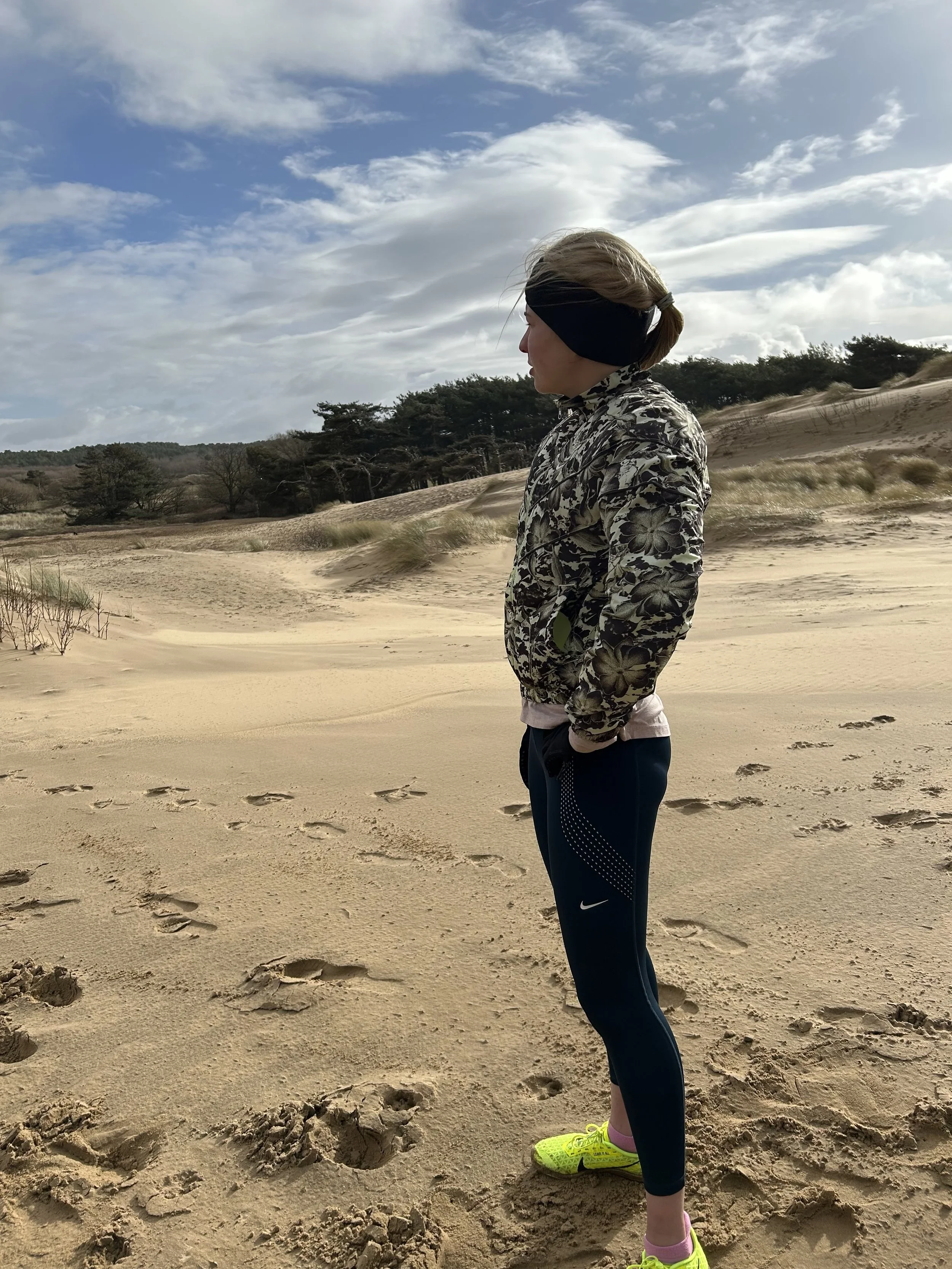
One word: sand.
Notably, this legend of the track used sand dunes as part of his training in the 1970s (around the time he was preparing for the 800m and 1500m). What followed earned him a place in the history books and notoriety that will last a lifetime and beyond.
Running up the sand dunes enabled him to improve his leg strength. The unstable surface strengthened his calves, hamstrings and glutes. This enabled him to execute devastating final sprints in his 800m races. Just ask Steve Cram!
Moreover, demanding dune sessions, created by the resistance of the sand, elevate the heart quickly by simulating high intensity interval training, which equips the body well for maintaining devastating speeds on the track. Alongside this, the sand absorbs impact and lowers the stress on the joints, which enables an athlete to train harder and longer whilst managing the risk of injuries.
Finally, the 800m and 1500m are head games as much as anything else. A strong mind in a strong body is what’s required! And trust me, after an intense session on the dunes, I know what it feels like; running up sand dunes is exhausting, uncomfortable and relentless. If nothing else, repeats up a 25 metre, 60-degree incline will give you a psychological edge! Training in those conditions will build resilience, improve tolerance and, hopefully, prepare you for a surge mid-race.
The phrase ‘building a beach body’ will never mean the same again. I tried it and had a (sand)blast!